Designing a water system is about more than connecting a well to a pump and pipes. A dependable system must be sized around your property, water demand, well conditions, pressure needs, future plans, and location.
At Murray Drilling Company, we design water systems based on need, performance, and long-term reliability — not simply the cheapest upfront option.
Schedule a Water System Consultation
The biggest mistake in water system design is choosing the cheapest route without considering long-term performance. Your water system is one of the most important systems on your property, supporting drinking water, fixtures, appliances, irrigation, livestock, and future expansion.
A properly designed system delivers reliable water pressure, efficient pump operation, and equipment longevity. An undersized or poorly matched system can lead to low pressure, premature pump failure, wasted energy, and expensive upgrades later.
System sizing starts with how the water will actually be used. Household size, bathrooms, fixtures, appliances, outdoor plans, livestock, irrigation, and future expansion all affect water demand.
Well depth, pumping level, elevation changes, distance to the home, soil conditions, and local water availability all influence pump selection, pressure requirements, and system design.
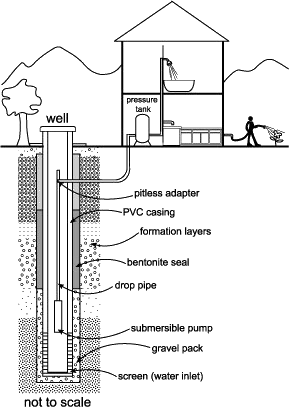
A water system is made of interrelated components. Each part needs to be properly matched so the system can deliver reliable flow and pressure without unnecessary strain.
Usually a well, but may also include a cistern, spring, or municipal connection depending on the property.
Moves water from the source. Options may include submersible pumps, jet pumps, booster pumps, or VFD-controlled systems.
Stores water under pressure, reduces short cycling, and helps maintain steady pressure throughout the system.
Transports water to the home, outbuildings, irrigation zones, livestock areas, or other usage points.
Pressure switches, relays, and control systems help automate operation and protect equipment.
Water quality issues such as sediment, bacteria, minerals, or hardness may require filtration or treatment equipment.
Proper sizing helps ensure the pump does not work too hard, the pressure tank cycles efficiently, and the system delivers enough water without waste or strain.
Under-sizing can cause poor pressure, inadequate flow, and pump burnout. Over-sizing can increase energy use, shorten equipment life, and create unnecessary operating costs. The goal is to keep every component working within its proper performance range.
A reliable design starts with real-world usage, flow requirements, pressure needs, pump selection, and properly matched equipment.
We evaluate how much water the system must support during daily and peak use. Factors include people, bathrooms, fixtures, appliances, irrigation, livestock, pools, fountains, greenhouses, and future plans.
Flow rate is measured in gallons per minute. The system must handle peak use without major pressure drops, especially when multiple fixtures, appliances, or outdoor demands are active at once.
Total Dynamic Head includes static lift, friction loss through pipes and fittings, elevation changes, and the desired pressure at the point of use. This calculation helps determine pump type and horsepower.
Pump selection is based on flow rate, well depth, pumping level, pressure requirements, and system layout. Deep wells often require submersible pumps, while other applications may need jet pumps, booster pumps, or VFD options.
The pressure tank reduces pump cycling and helps maintain consistent pressure. Tank sizing depends on pump flow, drawdown capacity, and pressure settings. An undersized tank can shorten pump life.
Filtration, treatment, disinfection, inspections, and future service access are part of a dependable design. A well-built system should be maintainable, efficient, and ready for changing property needs.
These examples show why water system design should be calculated carefully instead of guessed. Fixture demand, pressure requirements, elevation, pipe distance, and well depth all affect the final system design.
Flow rate is measured in gallons per minute. A system must be sized to handle likely peak use without major pressure drops.
A typical home may need roughly 10–15 GPM during peak use. Larger homes, irrigation systems, farms, livestock properties, or commercial operations may require significantly more.
Total Dynamic Head measures the resistance the pump must overcome, including lift, friction loss, and desired pressure.
This number helps determine the pump type, horsepower, and performance curve needed for reliable operation.
Different properties require different water system priorities. A home, farm, livestock property, or commercial site should never be sized with a one-size-fits-all approach.
Residential systems need steady pressure across fixtures, quiet operation, reliable pump cycling, future expansion planning, and proper tank sizing for everyday household use.
Farms and rural properties may require higher-volume systems for irrigation, livestock watering, seasonal demand, frost protection, and durable long-term operation.
Larger systems may require complex plumbing networks, backup planning, automation, higher peak flow, water treatment, and careful coordination with codes and authorities.
Cutting back on depth, installing the smallest pumping equipment available, or choosing low-quality components can lead to poor performance, premature equipment failure, and costly replacement work. A system that saves money today may cost far more in repairs, upgrades, and inconvenience later.
We are positive we will not always be the fastest scheduled job or the cheapest bid you receive. Our goal is to provide a properly designed, quality system at a fair price.
Need help planning a new water system, upgrading an existing setup, or understanding what size system your property really needs? Murray Drilling Company can help you design around performance, reliability, and long-term value.
Request Water System Design Help